
Call us now :08045801178
 Send Inquiry
 Send Inquiry
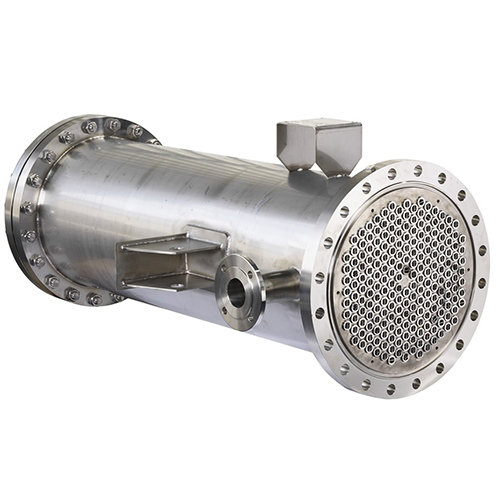
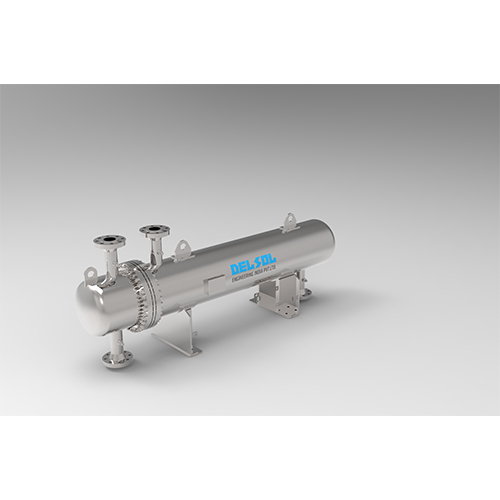
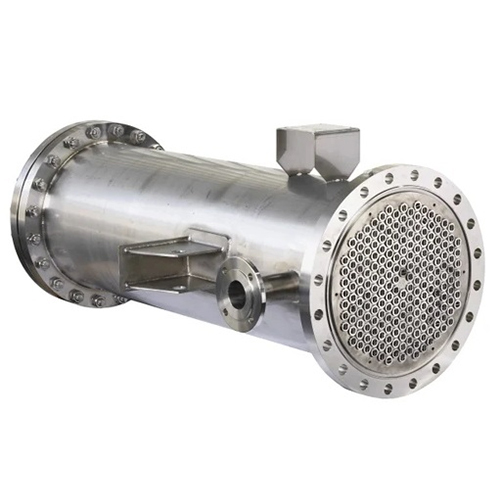
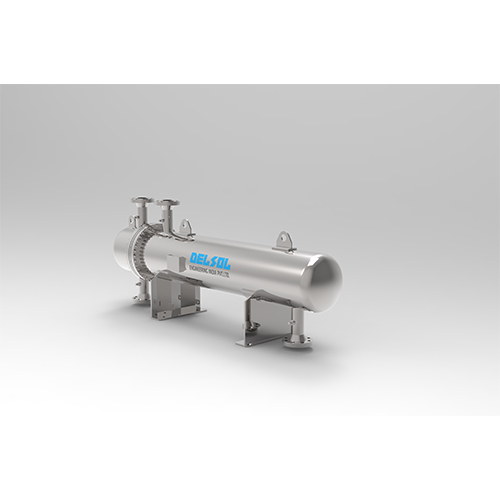
SS Heat Exchanger
Price 120000 INR/ Unit
MOQ : 1 Unit
SS Heat Exchanger Specification
- Temperature
- High-temperature
- Thickness
- 5 To 12 Millimeter (mm)
- Usage
- Industrial
- Condition
- New
- Working Presssure
- High
- Height
- 500 To 1800 Millimeter (mm)
- Product Type
- Heat Exchanger
- Voltage
- 440 Volt (v)
- Power
- 440 Volt (v)
- Color
- Silver
- Weight
- 200 To 15000 Kilograms (kg)
- Width
- 500 To 2200 Millimeter (mm)
- Length
- 1000 To 7500 Millimeter (mm)
SS Heat Exchanger Trade Information
- Minimum Order Quantity
- 1 Unit
- Payment Terms
- Cash in Advance (CID), Cash Advance (CA)
- Supply Ability
- 10 Units Per Month
- Delivery Time
- 30 Days
- Main Domestic Market
- All India
SS Heat Exchanger About
Heat Exchanger Complete Information
What is a Heat Exchanger?
A heat exchanger is a mechanical devicedesigned to transfer heat between two or more fluids (liquid or gas) withoutmixing them. Heat exchangers are widely used in heating, cooling, and energyrecovery applications across industries.
How Does a HeatExchanger Work?
Heat flows from the hot fluid to the coldfluid through a solid barrier (usually metal) or directly if fluids are incontact but not mixed. The direction of flow can be:
- Parallel flow: Both fluids move in thesame direction.
- Counterflow: Fluids move in oppositedirections (most efficient).
- Crossflow: Fluids move perpendicular toeach other.
Types of Heat Exchangers
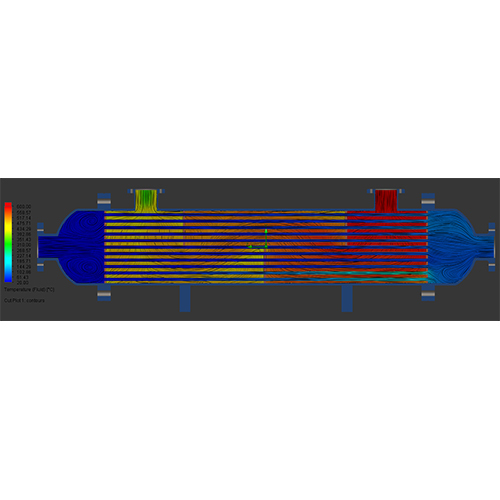
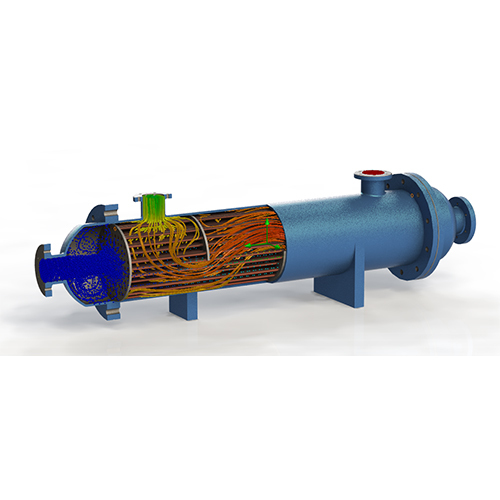
Shell and Tube Heat Exchanger
Bundle of tubes inside a cylindrical shell.Used in power plants, oil refineries, HVAC.
Plate Heat Exchanger
Thin, corrugated plates stacked together.Compact, efficient, easy to clean.
Finned Tube Heat Exchanger
Tubes with fins to increase surface area.Used in HVAC, air-side applications.
Air Cooled Heat Exchanger
Uses fans to cool tubes exposed to air.Common in remote industrial sites.
Double Pipe Heat Exchanger
Simple pipe-in-pipe design for low capacityapplications.
Spiral Heat Exchanger
Two spiral channels; suitable for foulingor viscous fluids.
Plate and Shell Heat Exchanger
Plates enclosed in a shell; hybrid designfor demanding environments.
Materials Used
- Stainless Steel Corrosion-resistant
- Carbon Steel Cost-effective
- Titanium Ideal for seawater
- Copper/Brass High conductivity
- Exotic Alloys For corrosive environments like Inconel, Hastelloy, Graphite
Applications
- HVAC Heating and cooling air/water
- Power Generation Condensers,economizers
- Petrochemical Crude oil heaters, gascoolers
- Food & Beverage Pasteurization,chilling
- Pharmaceuticals Clean processtemperature control
- Automotive Radiators, oil coolers
Selection Checklist
- Type of Fluid Clean, dirty, corrosive
- Flow Rate High or low
- Temperature Range Operating limits
- Pressure Rating Max allowable pressure
- Heat Load Required energy transfer
- Maintenance Needs Cleanability, accessibility
- Space Compact or large footprint
- Cost Capital + operating
Tell us about your requirement

Price:
Quantity
Select Unit
- 50
- 100
- 200
- 250
- 500
- 1000+
Additional detail
Mobile number
Email


 Send Inquiry
Our Products
- Roll Coolant System
- Vertical Type Candle Magnetic Separator
- Industrial Agitator
- Paper Band Filter
- Compact Band Filter
- Vacuum Filter
- Magnetic Separator
- Sump Tanks
- Cartridge Filters
- Self Cleaning Filter
- Oil Skimmers
- Chip Wringer
- Scraper Conveyor
- Slat Conveyor
- Screw Conveyors
- Belt Conveyors
- Chemical Plants Pipeline
- SS Chain Conveyor
- Air Receiver Vessel
- SS Tank
- Water Treatment Tank
- Heat Exchanger
- Heavy Machinery Base Frames
- Bucket Elevator
- Magnetic Chip Conveyor
- Chip Conveyor
- Oil Filtration System
- Furnace Casing
- Conveyor System

Gat No- 467, At/Po- Urawade, Tal- Mulshi, Dist- Pune, Pune - 412115, Maharashtra, India

Mr Shankar Prabhakar Gade
(Director)
Mobile :08045801178
 Send Inquiry
 Send SMS
 Call Me Free
Developed and Managed by Infocom Network Private Limited.
 English
 Spanish
 French
 German
 Italian
 Chinese (Simplified)
 Japanese
 Korean
 Arabic
 Portuguese