
Call us now :08045801178
 Send Inquiry
 Send Inquiry
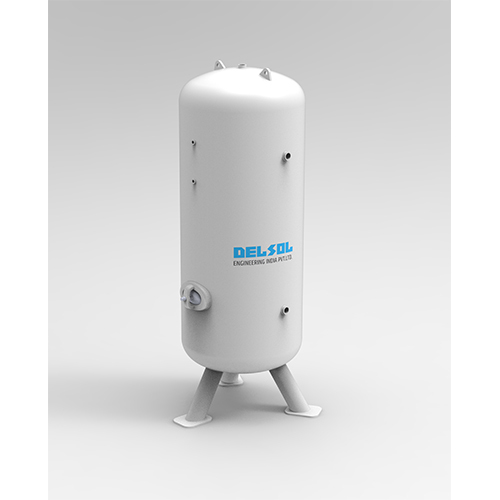
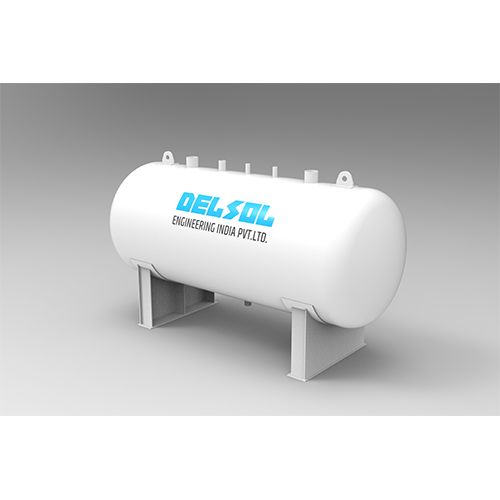
Industrial Air Receiver Vessel
Price 50000 INR/ Unit
MOQ : 1 Unit
Industrial Air Receiver Vessel Specification
- Usage
- Industrial
- Material
- MS & SS
- Size
- Different available
- Capacity
- 50 To 5000 Ltr
- Height
- 300 To 3800 Millimeter (mm)
- Product Type
- Reservoir & Vessel
- Weight
- 300 To 3000 Kilograms (kg)
- Condition
- New
- Color
- Silver, Gray, Blue, Appel Green.
- Width
- 300 To 2200 Millimeter (mm)
Industrial Air Receiver Vessel Trade Information
- Minimum Order Quantity
- 1 Unit
- Supply Ability
- 10 Units Per Month
- Delivery Time
- 30 Days
- Main Domestic Market
- All India
Industrial Air Receiver Vessel About
Air Reservoir Complete Information
What is an AirReservoir?
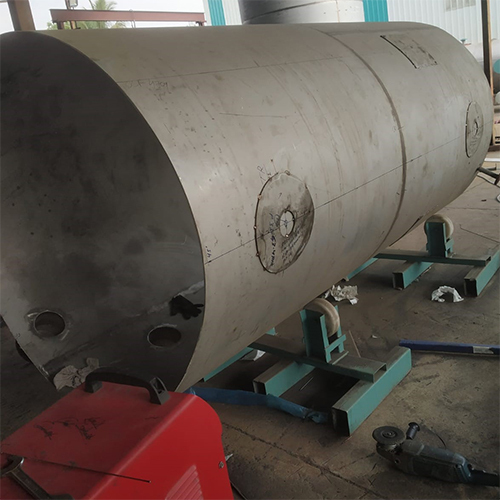
An air reservoir, also known as an airreceiver tank, is a pressure vessel used to store compressed air before itenters the piping system or air-consuming devices. It helps in maintaining consistentair pressure, reduces compressor cycling, and acts as a buffer during peakdemand.
Function andBenefits
- Stores compressed air for future use
- Reduces pressure fluctuations
- Dampens pulsations from reciprocating compressors
- Acts as a heat exchanger (air cools down before use)
- Helps remove moisture and oil droplets
- Reduces compressor wear by minimizing load/unload cycles
Types of AirReservoirs
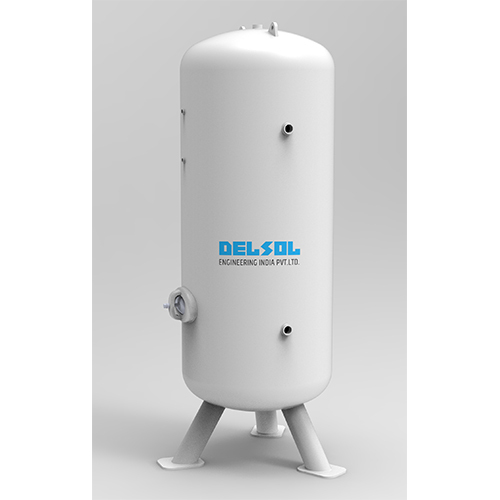
- Vertical Air Reservoir Saves floorspace, commonly used indoors.
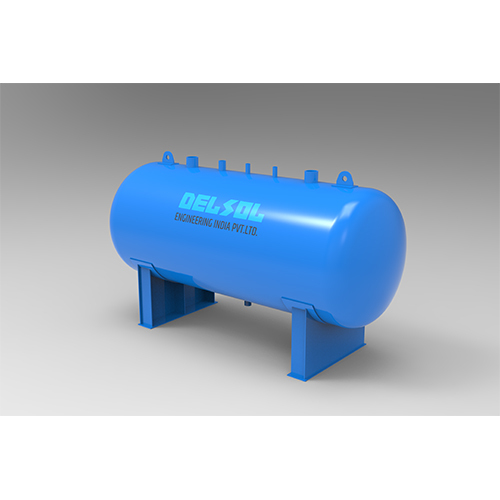
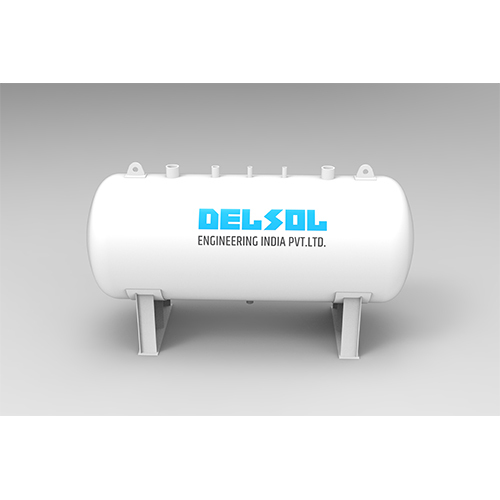
- Horizontal Air Reservoir Easier access for maintenance, used where heightis restricted.
- Mobile/Portable Reservoir Mounted on wheels for mobile applications.
Typical Specifications (Example: 0.8 m3 Vertical Type)
- Capacity: 0.8 cubic meters
- Orientation: Vertical cylindrical
- Construction: Welded steel plate
- Design Pressure: 10 bar (typical)
- Test Pressure: 1.5 design pressure (e.g., 15 bar)
- Certification: ASME Section VIII Div. 1 or IS:2825
- Connections: Inlet, outlet, drain, safety valve, pressure gauge
- Surface Finish: Red oxide primer + enamel coat or galvanization
Materials Used
- Shell & Heads: Carbon steel orstainless steel
- Nozzles & Fittings: Carbon steel, SS, or brass
- Coating: Internal anti-corrosion epoxy or food-grade coating if required
Applications
- Compressed air systems in factories
- Pneumatic automation lines
- Air brakes in locomotives and heavyvehicles
- HVAC systems and air dryers
- Energy storage and buffering in peak load
Design Standards & Testing
- Design Code: ASME Section VIII Div. 1 orIS 2825
- Hydrostatic Test: As per ASME UG-99 (usually 1.3 to 1.5 times designpressure)
- Non-Destructive Testing (NDT): Radiography, ultrasonic, or dye penetranttesting
- Safety Accessories: Pressure relief valve, drain valve, pressure gauge
Tell us about your requirement

Price:
Quantity
Select Unit
- 50
- 100
- 200
- 250
- 500
- 1000+
Additional detail
Mobile number
Email


 Send Inquiry
Our Products
- Roll Coolant System
- Vertical Type Candle Magnetic Separator
- Industrial Agitator
- Paper Band Filter
- Compact Band Filter
- Vacuum Filter
- Magnetic Separator
- Sump Tanks
- Cartridge Filters
- Self Cleaning Filter
- Oil Skimmers
- Chip Wringer
- Scraper Conveyor
- Slat Conveyor
- Screw Conveyors
- Belt Conveyors
- Chemical Plants Pipeline
- SS Chain Conveyor
- Air Receiver Vessel
- SS Tank
- Water Treatment Tank
- Heat Exchanger
- Heavy Machinery Base Frames
- Bucket Elevator
- Magnetic Chip Conveyor
- Chip Conveyor
- Oil Filtration System
- Furnace Casing
- Conveyor System

Gat No- 467, At/Po- Urawade, Tal- Mulshi, Dist- Pune, Pune - 412115, Maharashtra, India

Mr Shankar Prabhakar Gade
(Director)
Mobile :08045801178
 Send Inquiry
 Send SMS
 Call Me Free
Developed and Managed by Infocom Network Private Limited.
 English
 Spanish
 French
 German
 Italian
 Chinese (Simplified)
 Japanese
 Korean
 Arabic
 Portuguese